Thinking About Taking Down a Tree Yourself? Read This First.
Look, I get it. You're a homeowner in Billings, you're handy, and you're always looking to save a buck. That old cottonwood in the backyard is looking a little rough, and you're thinking, “How hard can it be to take it down myself?” Well, let me tell you, it can be a lot harder – and a lot more dangerous – than you think. I've seen some things over the years that'd make your hair stand on end, and most of them started with someone underestimating a tree.
Before you even think about firing up that chainsaw, you need to be honest with yourself about a few things. Tree removal isn't just about cutting; it's about physics, safety, and knowing what you're doing. A small, dead sapling? Maybe. A mature Ponderosa pine leaning towards your garage? Absolutely not. Let's break down what you need to consider.
When You CAN (Maybe) Do It Yourself
Okay, so there are a few scenarios where a DIY tree removal might be feasible. We're talking small stuff here, really small. Think:
- Young trees, less than 10-15 feet tall, with a trunk diameter no more than 4-6 inches.
- Trees that are clearly dead, completely separated from any structures, power lines, or other valuable plants.
- Trees that you can fell safely in a wide-open space, with plenty of clearance in the direction you want it to fall.
- You have the right safety gear: hard hat, eye protection, hearing protection, chainsaw chaps, and good gloves.
- You're comfortable and experienced with a chainsaw and felling techniques.
If you meet all those criteria, and I mean *all* of them, you might be able to handle it. But even then, proceed with extreme caution. One wrong cut, one unexpected gust of wind, and you've got a major problem on your hands. Always have a clear escape route, and never work alone. Tell someone what you're doing and when you expect to be done.
When You ABSOLUTELY Need to Call a Professional
This is where most trees fall, especially here in Billings where we've got everything from those old, massive shade trees in the North Park neighborhood to the smaller, but still tricky, evergreens around the Heights. You need a pro if:
- The tree is large: Anything over 20 feet tall, or with a trunk diameter over 8-10 inches, is a job for someone with specialized equipment and training.
- It's near structures: Your house, garage, fence, shed, or even your neighbor's property. The risk of damage is too high.
- It's close to power lines: This is non-negotiable. Power lines are deadly. Do not, under any circumstances, attempt to remove a tree near them. Call your utility company first, then a professional arborist.
- The tree is diseased or damaged: Weakened wood can be unpredictable. It might split or fall in ways you don't expect.
- It's leaning: A leaning tree has built-in tension and compression that can make felling incredibly dangerous.
- You're not sure: If you have any doubt at all, call us. Seriously. It's not worth risking your life or your property.
- You don't have the right equipment: Professional tree removal involves more than just a chainsaw. We're talking ropes, rigging, cranes, bucket trucks, specialized climbing gear, and chippers.
- You're dealing with difficult access: Sometimes a tree is in a tight spot, making a straight fall impossible. That requires technical rigging and controlled lowering, which is a pro's bread and butter.
Here at Lockwood Tree Solutions, we've got the experience and the gear to handle just about anything. We've seen it all, from storm-damaged trees after a big winter snow to old, decaying poplars that are just waiting to come down. We know the soil conditions around here, which can impact root stability, and we're familiar with the local weather patterns that can make a tree unstable.
What to Expect When You Hire a Pro
When you call a professional service like ours, here's what should happen:
- An on-site assessment: We'll come out, look at the tree, assess its condition, location, and any potential hazards. We'll discuss your goals and give you a clear estimate.
- Safety first: Before any cutting starts, we'll establish a safe work zone, protect your property, and ensure everyone involved knows the plan.
- Specialized equipment: Depending on the job, we might use climbing gear, a bucket truck, or even a crane to safely remove sections of the tree.
- Controlled removal: We don't just hack away. We use precise cuts and rigging techniques to control the direction and speed of each falling piece, ensuring it lands exactly where it's supposed to.
- Cleanup: A good crew will clean up all the debris, chip the branches, and leave your yard looking tidy. You can usually opt to keep the wood for firewood or have it hauled away.
After the Tree is Down: Stump and Debris
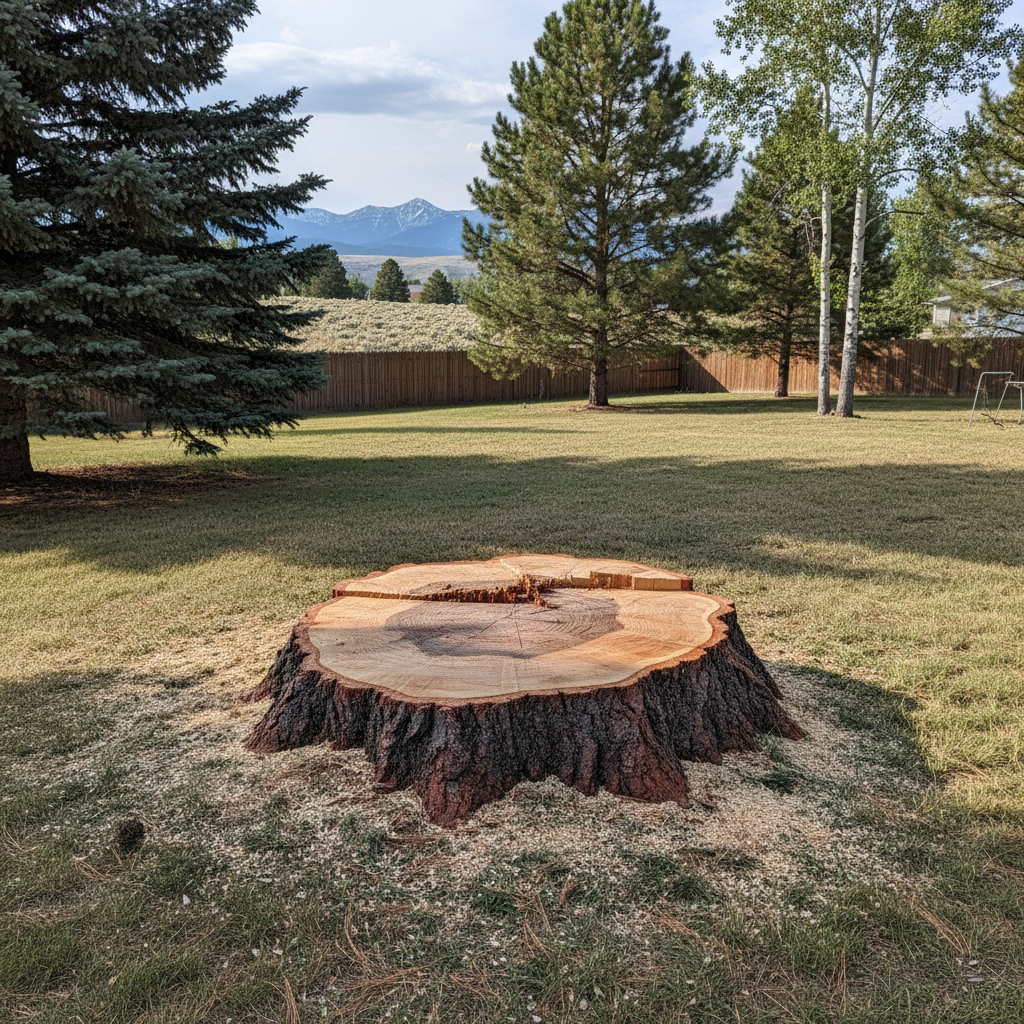
Once the tree is on the ground, you've still got the stump to deal with. Most professional tree removal services offer stump grinding as an additional service. This grinds the stump down below ground level, allowing you to plant grass or new landscaping over it. If you're doing it yourself, you'll have a stump to contend with, which can be a real pain to remove without the right equipment.
And then there's the debris. Even a small tree creates a surprising amount of brush and wood. If you're DIYing, plan for how you'll cut it up, haul it away, or chip it. Many local transfer stations will take green waste, but you'll need a way to get it there.
Ultimately, deciding whether to DIY or hire a pro for tree removal comes down to risk versus reward. For anything more than a small, easily accessible sapling, the risks of injury, property damage, and unexpected complications far outweigh the cost savings. Don't gamble with your safety or your home. Give us a call at Lockwood Tree Solutions; we're happy to answer your questions and provide a no-obligation estimate.