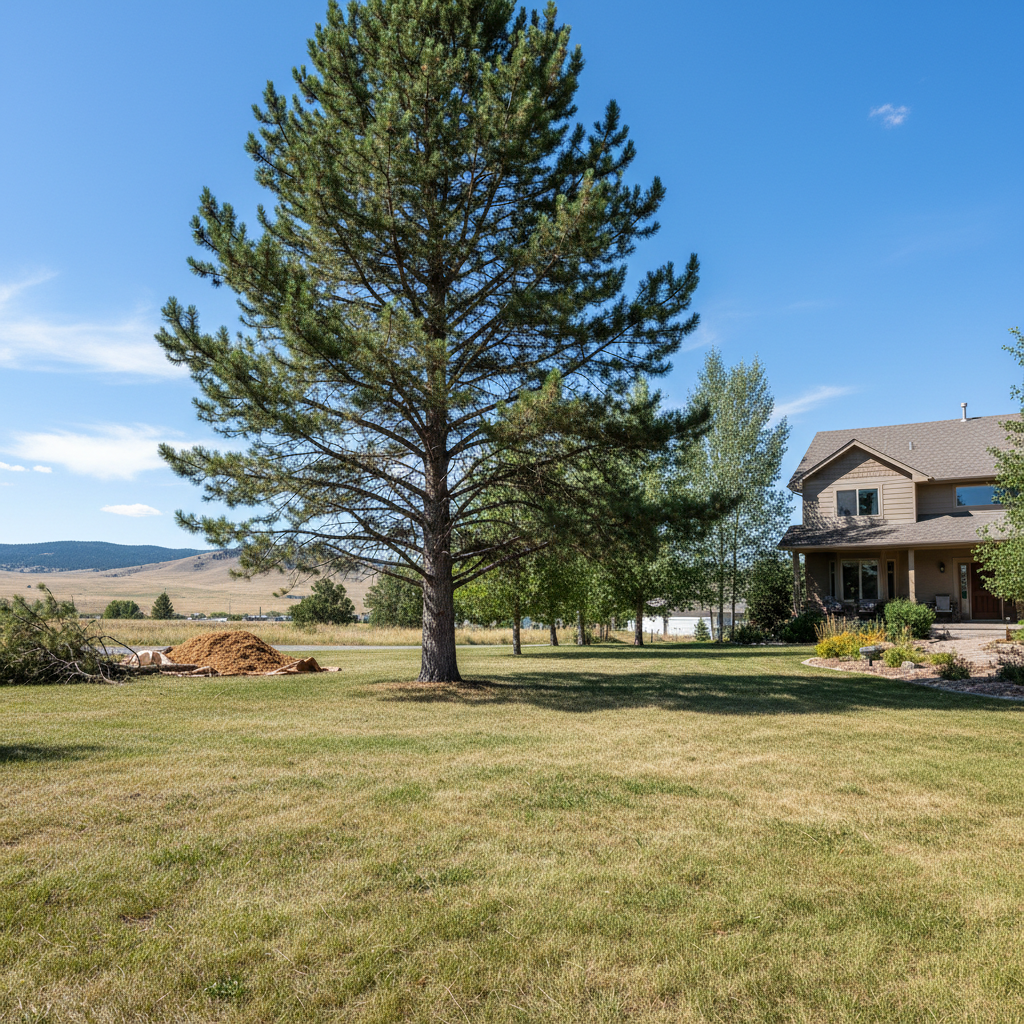
Ever spend a weekend clearing out heavy branches or pay a crew to clean up your yard, only to wonder what comes next? Tree Trimming in Billings is not a one-and-done deal, especially around Billings where our local climate tests every living thing from the Yellowstone Valley up to the Rimrocks. Between fierce winter freezes, dry summer spells, and our heavy alkaline clay soil, trees need a little extra attention after they have been pruned.
The way you treat a tree in the months right after Tree Trimming dictates whether it heals clean or starts declining. Lockwood Tree Solutions always tells property owners that cutting the branches is only half the battle. You have to manage the aftercare if you want those cuts to seal properly and keep the canopy vigorous.
Extending the Life of Your Trim Work
Once those cuts are made, the tree has to expend energy to compartmentalize the wound and prevent decay. In our semi-arid climate, moisture stress can stall that recovery dead in its tracks. Property owners will want to provide deep, slow watering sessions around the drip line—especially if we hit one of those dry stretches without rain or snowmelt. Avoid dumping fertilizer right into the soil immediately after Tree Trimming, either. Our local soils already have high pH levels that cause nutrient lockouts, and forcing rapid growth on a freshly pruned tree just creates weak, spindly shoots that cannot handle a heavy windstorm.
Mulching is another huge piece of the puzzle for Tree Service in Billings. Pile wood chips a few inches deep around the base, but keep them pulled back from the actual trunk so moisture does not rot the bark. This keeps the roots insulated against our wild temperature swings.
Spotting Trouble Down the Road
Regular maintenance means keeping an eye out for warning signs that something is off. You should not just ignore a tree once the crew packs up. Look out for things like:
- Excessive sap oozing from fresh cuts or strange cracks forming along the main trunk.
- Leaves turning yellow between the veins too early in the summer, which usually points to iron chlorosis in our alkaline dirt.
- Dead branches popping up in sections you just had cleaned out.
- Fruiting bodies or mushrooms sprouting near the base of the tree.
If you notice sawdust piling up at the bottom or bark starting to slough off in sheets, you might be dealing with borers or internal rot.
When to Bring in Professional Help
Some maintenance tasks are easy enough to handle from the ground with a pair of long-handled loppers, but others require a professional eye and proper rigging gear. If you are dealing with limbs encroaching on power lines, large heavy codominant stems showing split unions, or a mature cottonwood or ash that is showing widespread dieback, do not try to tackle it yourself from a wobbly ladder. Lockwood Tree Solutions provides Tree Service and Tree Trimming for homes and businesses in Billings.