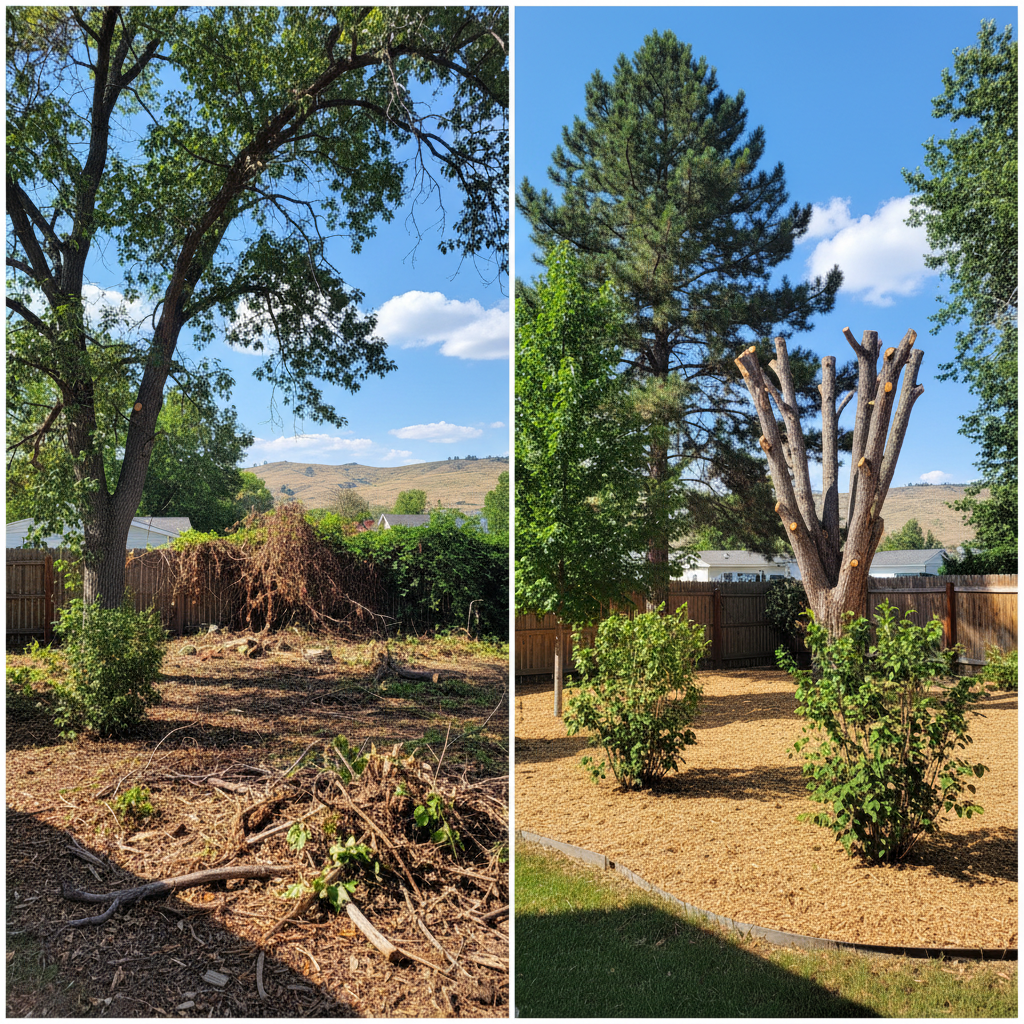
Got a big, mature tree on your property and wondering how to keep it healthy and looking good? You're probably looking at a couple of main options for pruning: crown reduction or crown thinning. I see a lot of folks get these mixed up, or they just don't know the difference. Let's clear that up, because knowing what your tree needs can save you a lot of headache and money down the road.
Crown Reduction: When You Need to Go Smaller
Crown reduction is exactly what it sounds like: we're reducing the overall size of the tree's canopy. This isn't topping, and it's important to understand that. Topping is hacking off branches indiscriminately, leaving stubs that often lead to decay and weak regrowth. A proper crown reduction, on the other hand, involves carefully cutting back larger branches to a smaller lateral branch that can take over as the leader. It's a much more skilled job, done with the tree's long-term health in mind.
So, why would you choose crown reduction? Well, maybe your tree is just too big for its space. Perhaps it's growing into your house, over power lines, or blocking too much sunlight from your garden. It's also a good option if a tree has structural issues, like a weak crotch, and we need to reduce the leverage on those weak points to prevent failure. Here in Billings, with our heavy snowfalls and occasional high winds, reducing the sail area of a large tree can really help prevent storm damage. It's often more expensive upfront because it's a more complex, time-consuming job that requires careful planning and execution.
A well-done crown reduction can actually improve a tree's structural integrity, making it more resilient to our local weather. That's durability for you. Maintenance after a good reduction is usually less frequent than other methods, maybe every 3-5 years, depending on the species and growth rate. Appearance-wise, if it's done right, the tree should still look natural, just smaller and more compact. If it looks like someone gave your tree a bad haircut, well, it wasn't done right.
Crown Thinning: Letting Light and Air In
Crown thinning is a different beast entirely. With thinning, we're not trying to make the tree smaller. Instead, we're selectively removing some of the smaller, interior branches to improve light penetration and air circulation throughout the canopy. Think of it like decluttering the inside of the tree. We take out crossing branches, weak branches, and those growing inwards, but we keep the overall shape and size of the tree pretty much the same.
Why thin? For one, better air circulation helps reduce the risk of fungal diseases, which can be a real problem for some species, especially in our sometimes humid spring and early summer. Increased light can help the inner foliage stay healthier and can also benefit anything growing underneath the tree. It can also reduce the canopy's weight without significantly changing its size, which can be a good proactive measure against storm damage, especially for trees with dense canopies. I've seen plenty of trees in the Heights or West End neighborhoods that are just too dense, and a good thinning makes a world of difference.
Cost-wise, thinning is often less expensive than a full reduction because it's generally less labor-intensive and doesn't involve removing large, heavy sections of the tree. Durability isn't about making the tree smaller, but making the existing structure more robust and less prone to disease. Maintenance for thinning is usually every 2-4 years, depending on how fast your tree grows and how dense it gets. The appearance should be a healthier, more open canopy that still looks like a full-sized tree, just a bit tidier and less 'stuffed'.
So, Which One's Right for Your Billings Tree?
Here's the deal: most of the time, crown thinning is the preferred method for maintaining healthy, mature trees. It's less stressful on the tree, promotes better overall health, and typically costs less over the long run because it's preventative. It's what we recommend for general maintenance for most species here in Billings.
Crown reduction is usually reserved for specific situations where the tree's size is genuinely a problem, or there's a significant structural issue that needs addressing. It's a more aggressive approach. While it's necessary sometimes, it's not the first choice for routine care. Think of it as a necessary surgery, not a regular check-up.
The best way to figure out what your tree needs is to have a certified arborist take a look. We can assess your tree's health, its location, and your goals for your property, then recommend the best course of action. At Lockwood Tree Solutions, we're all about giving you honest advice that's best for your trees and your wallet. Don't just guess; get an expert opinion. It makes all the difference.